Western Sichuan isn't just beautiful to look at — it's full of experiences you simply can't replicate anywhere else. These are the things our travelers talk about most when they get home.
One of the most unforgettable moments in Western Sichuan is watching Mount Gongga at sunset.
In Chinese, this is often called Rizhao Jinshan — "sunlight on the golden mountain" — the brief moment when the last light turns a snow-covered peak from white to gold, and sometimes deep copper.
Near Muyacuo Valley, there is a remote mountain pass where this can happen on a clear evening. No crowded viewpoint, no loud tour group — just the mountain changing color as the plateau grows quiet.
It may last only a few minutes, but for many travelers, it becomes one of the most powerful memories of the journey.
At high altitude, far from the bright lights of big cities, the night sky in Western Sichuan can feel completely different from what most travelers are used to. On a clear night, you may see a sky full of stars — and sometimes even the Milky Way with the naked eye.
Stargazing is not a fixed activity, as it depends on weather, cloud cover, timing, location, and road conditions. But if the conditions are right, your guide may suggest a suitable place to step outside, slow down, and look up at the plateau night sky.
It's a simple moment, but often one of the most quietly memorable parts of the journey.
The highland grasslands around Tagong and the valleys of Western Sichuan are home to large colonies of Himalayan marmots — round, curious creatures that sit upright outside their burrows and watch you back. They're completely unafraid of people who approach slowly.
It sounds like a small thing, but sitting quietly on a hillside with marmots going about their day around you, with snow peaks in the background, is unexpectedly calming. Travelers who encounter them almost always mention it as a highlight.
On some slower-paced routes — especially around places like Jiagenba Valley — we may arrange an outdoor picnic or coffee break if the weather, timing, and local conditions allow.
It might be in a quiet valley where streams run through meadows beneath snow peaks, or simply somewhere along the route where the landscape invites you to pause. Not in a car park, but in the scenery itself.
It's a small, flexible moment rather than a fixed itinerary item. But when it happens, it often becomes one of the most memorable parts of the journey — a chance to slow down, breathe, and simply be there.
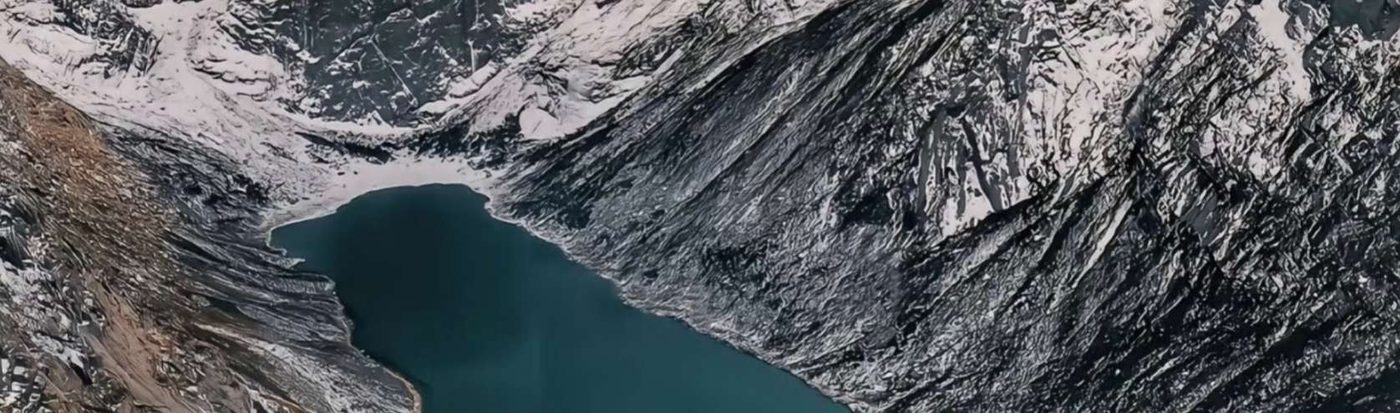
For travelers on the 7-day route, the hike to Milk Lake inside Yading Nature Reserve is the physical centrepiece of the trip. From the Luorong Pasture trailhead, you climb through changing alpine terrain to a glacial lake whose turquoise colour doesn't look like it should exist in nature.
It's about 10 kilometres at high altitude, so it requires reasonable fitness and proper acclimatisation — which is why it appears on day three, after two days of gradual altitude gain. The effort is real. So is the reward.
Lhagang Monastery (Tagong Monastery) sits at the edge of the grassland in Tagong Town — not as a tourist attraction, but as a working monastery where monks live, study, and practise. Prayer wheels line the outer walls. Butter lamps burn inside. The smell of incense is everywhere.
Coming here in the early morning or late afternoon — when tour groups have gone — gives you a quieter, more honest encounter with Tibetan Buddhism than most visitors ever get.
The G318 National Highway from Chengdu to the Tibetan border is one of the great drives in Asia — not because of any single landmark, but because of what the road does over its length. You leave the flat Sichuan basin, climb through forested mountains, cross high passes, and emerge onto the plateau in stages. The landscape changes every hour.
Road trip culture is deeply woven into this route — Tibetan prayer flags tied to mountain passes, overlanders from across China taking photos at altitude markers, small teahouses where truckers stop on long journeys. Being on this road feels different from being at a destination.
"The thing nobody tells you is that it's not one big moment. It's ten small ones — a light changing on a mountain, a marmot appearing from nowhere, a monastery that smells like your grandmother's house somehow. You stop trying to explain it and just let it happen."
— A traveler who came for 5 days and extended to 7Which experiences are right for your trip?
Some of these are on both itineraries. Some only on the 7-day. We'll help you figure out what fits your time and energy.