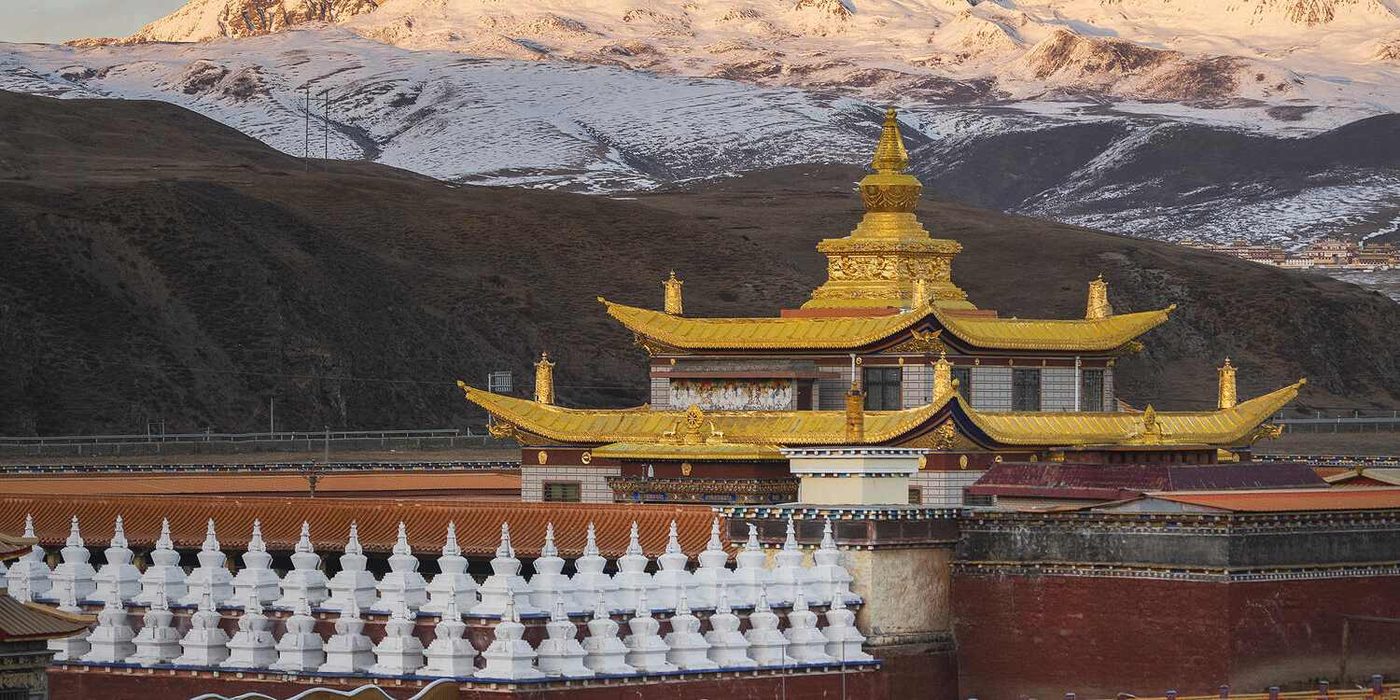
For many travelers, the image of "Tibet" is not only about one place. It is about snow mountains, prayer flags, monasteries, grasslands, yaks, high-altitude roads, and a deep sense of spirituality.
But these landscapes and cultural experiences are not limited to the Tibet Autonomous Region.
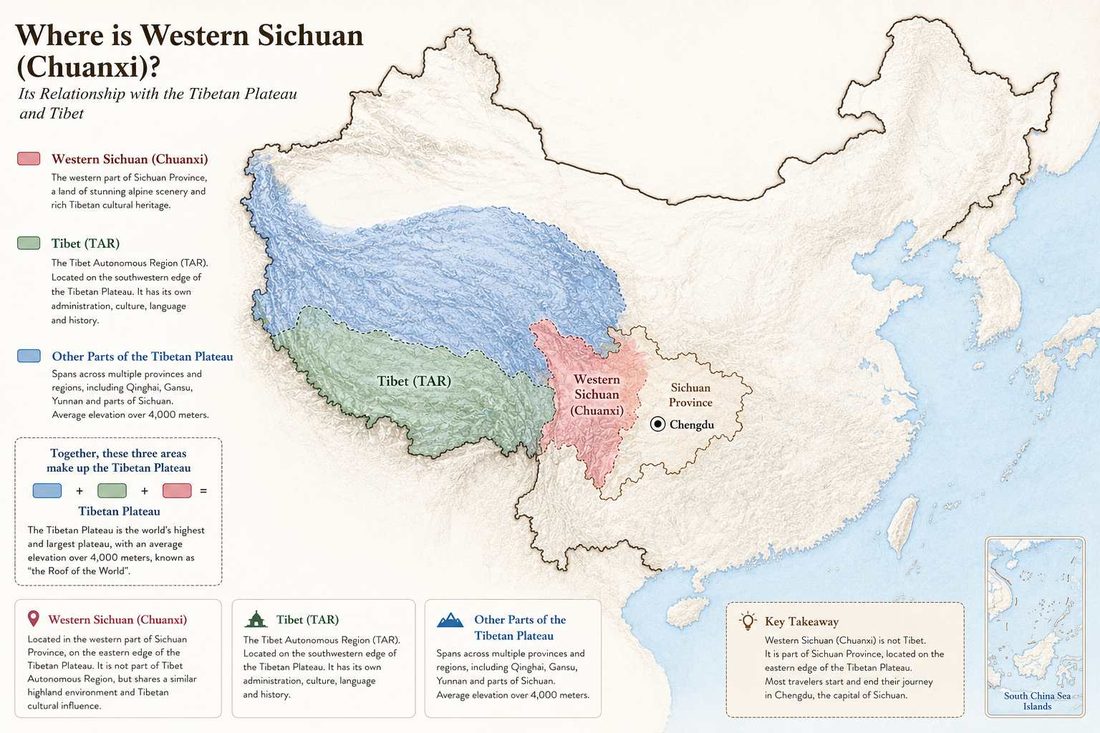
They belong to the wider Tibetan Plateau — a vast highland region that also includes parts of Qinghai and western Sichuan. Across these areas, Tibetan communities have lived for generations, shaping the monasteries, villages, traditions, and spiritual landscapes that many travelers dream of seeing.
This is why Western Sichuan feels so powerful. It is not Tibet as an administrative region, but it is very much part of the Tibetan Plateau and the broader Tibetan cultural world.
Here, you can experience snow-covered peaks, open grasslands, alpine lakes, prayer flags, white stupas, Tibetan monasteries, and highland villages — often with more flexibility, fewer crowds, and easier access from Chengdu.
So if what draws you to Tibet is the landscape, culture, and feeling of the plateau, Western Sichuan may be one of the most natural ways to experience it.
Side by Side
| Tibet (TAR) | Western Sichuan | |
|---|---|---|
| Special Permit Required | Yes — Tibet Travel Permit required for all foreign visitors, must be arranged in advance | No permit needed — Standard Chinese visa only |
| Access from Chengdu | Flight or train to Lhasa (~2 hours flight, or 40+ hours by train) | Direct road trip — Drive from Chengdu, no flights needed |
| Crowd Level | Major sites (Potala Palace, Namtso Lake) are heavily visited, especially in peak season | Far fewer international tourists — many areas feel genuinely remote |
| Altitude | Lhasa: 3,650m. Many areas above 4,500m | The main scenic areas are around 3,500–4,700m in altitude. Gradual ascent from Chengdu helps acclimatisation. |
| Tibetan Culture | Strong Tibetan culture, though increasingly influenced by tourism infrastructure | Authentic Tibetan villages, monasteries, grasslands — less curated, more everyday |
| Landscape Type | High plateau, Himalayan peaks, sacred lakes | Tibetan Plateau scenery, snow mountains, alpine valleys, grasslands, stone forests, and glacier valleys |
| Trip Cost | Higher overall — permit fees, guided tour requirements, flight costs | More affordable — no permit fees, no mandatory guided tours |
| Flexibility | Tour groups or licensed guides often required | Fully flexible — private travel, custom pace, no fixed group |
What Western Sichuan Actually Feels Like
Real Tibetan Plateau — without the logistics
You're on the same geographic plateau, with the same altitude, the same yaks on the grassland, the same prayer flags around the monasteries. The cultural experience is genuine, not staged for tourists.
The journey itself is part of the experience
Driving the G318 Highway from Chengdu is one of the great road trips in Asia. You watch the landscape transform from Sichuan farmland to high mountain passes — the transition is part of what makes it memorable.
Quieter places, slower pace
Many locations in Western Sichuan see very few international visitors. Tagong Grassland, Jiagenba Valley, Moshi Park — these are places where you might be the only foreigners around.
Less paperwork, more freedom
No Tibet Travel Permit. No group tour requirement. Just a standard Chinese visa and the freedom to design your own route at your own pace.
The honest answer: it depends what you're looking for.
If seeing Lhasa, the Potala Palace, or Everest Base Camp is on your list — then Tibet is Tibet, and there's no substitute. Go.
But if what you're really looking for is vast open landscapes, Tibetan monastery culture, snow mountains, and a feeling of genuine remoteness — without a permit, without a mandatory guide, and with the freedom to design your own journey — then Western Sichuan often delivers more than people expect.
Many travelers who come planning to "settle for" Western Sichuan leave having had the trip of their lives.
Still have questions?
Ask us anything — permits, altitude, what to expect on the road. No booking required.